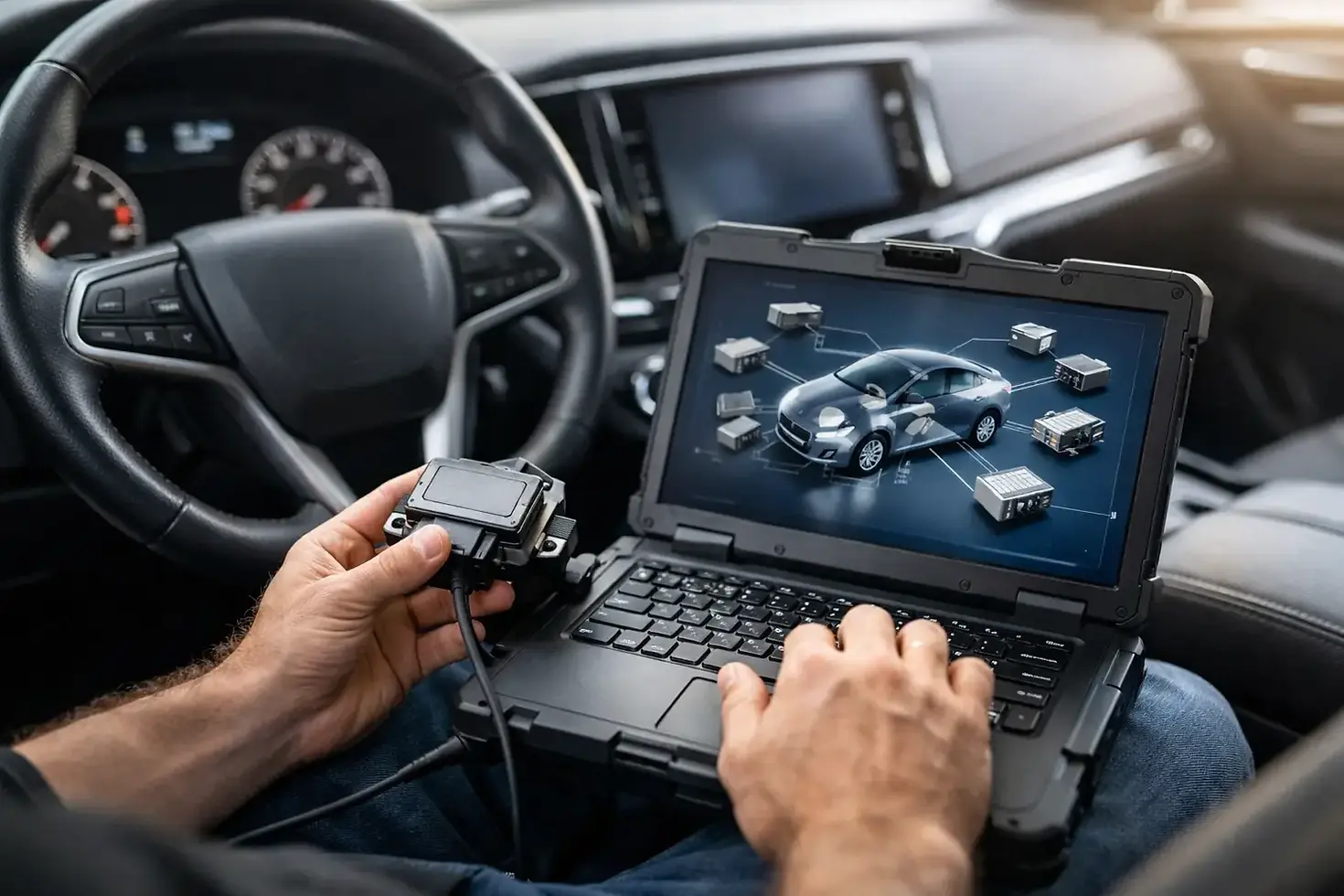
Vehicle Module Programming Guide for Drivers

A replacement part can be installed perfectly and still leave a vehicle unable to start, shift, communicate, or clear a warning light. That is where a vehicle module programming guide becomes useful: many modern repairs require the vehicle's computers to be identified, configured, and tested after the hardware work is complete.
For drivers, the practical point is simple. Programming is not an optional add-on or a way to make a repair sound more complicated. When a module requires it, proper programming is part of getting the vehicle back to normal operation safely.
What vehicle module programming actually means
Your vehicle has multiple electronic control modules. These are small computers that manage specific systems, such as the engine, transmission, anti-lock brakes, airbags, body electronics, climate control, instrument panel, steering, and security system. They share information across the vehicle's communication network.
Module programming is the process of loading the correct manufacturer-approved software or configuration into one of those computers. Depending on the repair, a technician may also need to enter vehicle-specific information, match the module to the anti-theft system, calibrate sensors, or perform relearn procedures.
A useful comparison is replacing a phone with the same model. The phone may turn on, but it still needs the right account settings, updates, and data before it works the way it should. A vehicle module needs an even more controlled process because it may affect starting, braking, safety restraints, or emissions-related systems.
Programming is sometimes confused with diagnostics. Diagnostics finds the reason for a problem. Programming updates or configures a module once the repair calls for it. A good shop does not jump straight to programming just because a scan tool shows a code. The wiring, power supply, grounds, network communication, and related components need to be checked first.
When a module may need programming
The most common situation is module replacement. If an engine control module, transmission control module, body control module, ABS module, or other computer has failed and is replaced, the replacement often needs to be programmed to the specific vehicle.
This can also be necessary after a software update. Manufacturers periodically release updates to correct known operating issues, improve drivability, address communication faults, or support a related repair. Not every vehicle concern has a software fix, but updates can be the correct answer when the manufacturer has identified one.
Other situations are less obvious. A programming or setup procedure may be needed after replacing certain sensors, an electronic steering component, a battery monitoring system, a key or immobilizer-related part, or even some climate-control components. A module may need to learn positions, pressure values, key information, tire data, or other vehicle-specific settings before it can operate correctly.
Symptoms that can point toward a module, communication, or programming concern include multiple warning lights, a no-start condition, loss of power accessories, transmission shifting problems, a check-engine light that returns after repair, or a replacement component that will not function. Those symptoms do not automatically mean the module is bad. A damaged wire, weak battery, blown fuse, corroded connector, or poor ground can produce very similar results.
Why the right diagnosis comes first
Modern vehicles can store dozens of trouble codes when voltage drops or network communication is interrupted. Reading those codes is only the beginning. A technician needs to determine which code is the cause and which ones are side effects.
For example, a vehicle with a weak battery may set communication codes in several modules. Reprogramming those modules would not fix the real issue. In another case, a replacement module may be correct but unable to communicate because a connector pin is bent or a network wire is damaged. This is why electrical diagnosis and programming belong together.
A careful process protects you from replacing expensive parts unnecessarily. It also helps prevent a situation where a vehicle leaves the shop with warning lights off temporarily but the original fault still waiting to return.
What happens during a professional programming visit
The process begins with confirming the vehicle's concern and checking for stored faults in all relevant systems. The technician verifies vehicle identification information, module part numbers, software compatibility, battery condition, and system voltage. Stable voltage matters because an interruption during programming can damage the module or leave it incomplete.
Next, the technician connects professional diagnostic equipment and follows the correct procedure for that make, model, and repair. This may involve writing new software, transferring configuration information, pairing security data, or completing a calibration. The exact steps depend on the vehicle. Two modules that look similar may have very different setup requirements.
Once programming is complete, the work is not finished. The technician should clear applicable codes, run required relearns or calibrations, confirm communication between modules, and test the original concern. A road test may be needed for issues involving shifting, engine operation, braking systems, or warning lights that only reset after normal driving.
That verification step matters. A successful software installation does not always mean every related mechanical or electrical problem has been resolved. The goal is a repair that works in real driving conditions, not just one that completes on a screen.
Why used modules can be a gamble
Used vehicle modules may look like a way to lower repair costs, and sometimes they can be viable. But they can also create complications that are not obvious when shopping by part number alone.
Many modules are locked to the donor vehicle's identification number or security system. Some cannot be reused without specialized preparation. Others may carry old configurations, incompatible software, hidden internal faults, or damage from the incident that put the donor vehicle in a salvage yard. A module can physically fit and still be wrong for the vehicle.
New or remanufactured modules are often more predictable, but they still need the correct programming and setup. The best choice depends on availability, cost, vehicle age, module type, and whether the manufacturer allows reuse. A reputable repair shop should explain the options and the trade-offs before moving forward.
Can module programming be done at home?
Some vehicle owners use consumer scan tools for basic code reading, maintenance resets, and limited service functions. Those tools can be helpful, but they are not a substitute for full diagnostic and programming capability.
Programming the wrong file, losing battery voltage midway through the process, or changing settings without understanding their purpose can create bigger problems. In some cases, the vehicle may not start afterward. Security-related programming is especially sensitive, since it can involve keys, immobilizer data, and anti-theft functions.
There are exceptions for experienced technicians and advanced enthusiasts with the correct equipment, service information, stable power supply, and a clear understanding of the procedure. For most drivers, though, module programming is a repair best handled by a shop that can diagnose the complete system and stand behind the result.
Questions to ask before approving programming
Clear communication should be part of any electrical repair. Before authorizing work, ask whether the module has been confirmed as faulty, whether the estimate includes diagnosis and programming, and whether additional calibration or relearn procedures are expected.
It also helps to ask whether the proposed module is new, remanufactured, or used, and what warranty applies to the part and labor. If a software update is being recommended, ask what concern it is intended to address and how the repair will be verified afterward.
These are reasonable questions, not signs that you distrust the shop. Programming can involve several connected systems, and a straightforward explanation helps you understand what you are paying for.
A practical path when warning lights will not stay off
If your vehicle has persistent electrical warnings, intermittent no-starts, unusual shifting, or a recently replaced component that is not working properly, avoid guessing. Make note of when the problem occurs, whether it follows a battery issue or repair, and which warning lights appear. That information can help narrow the diagnostic process.
Venice Auto Tech approaches module concerns by checking the vehicle as a system - not simply replacing a computer and hoping for the best. With proper diagnosis, correct programming, and final testing, the repair can address the cause of the problem and help you get back on the road with confidence.
A warning light may be frustrating, but it is also useful information. Address it early, ask for a clear explanation, and choose a repair process that treats the vehicle's electronics with the same care as its mechanical parts.


Comments