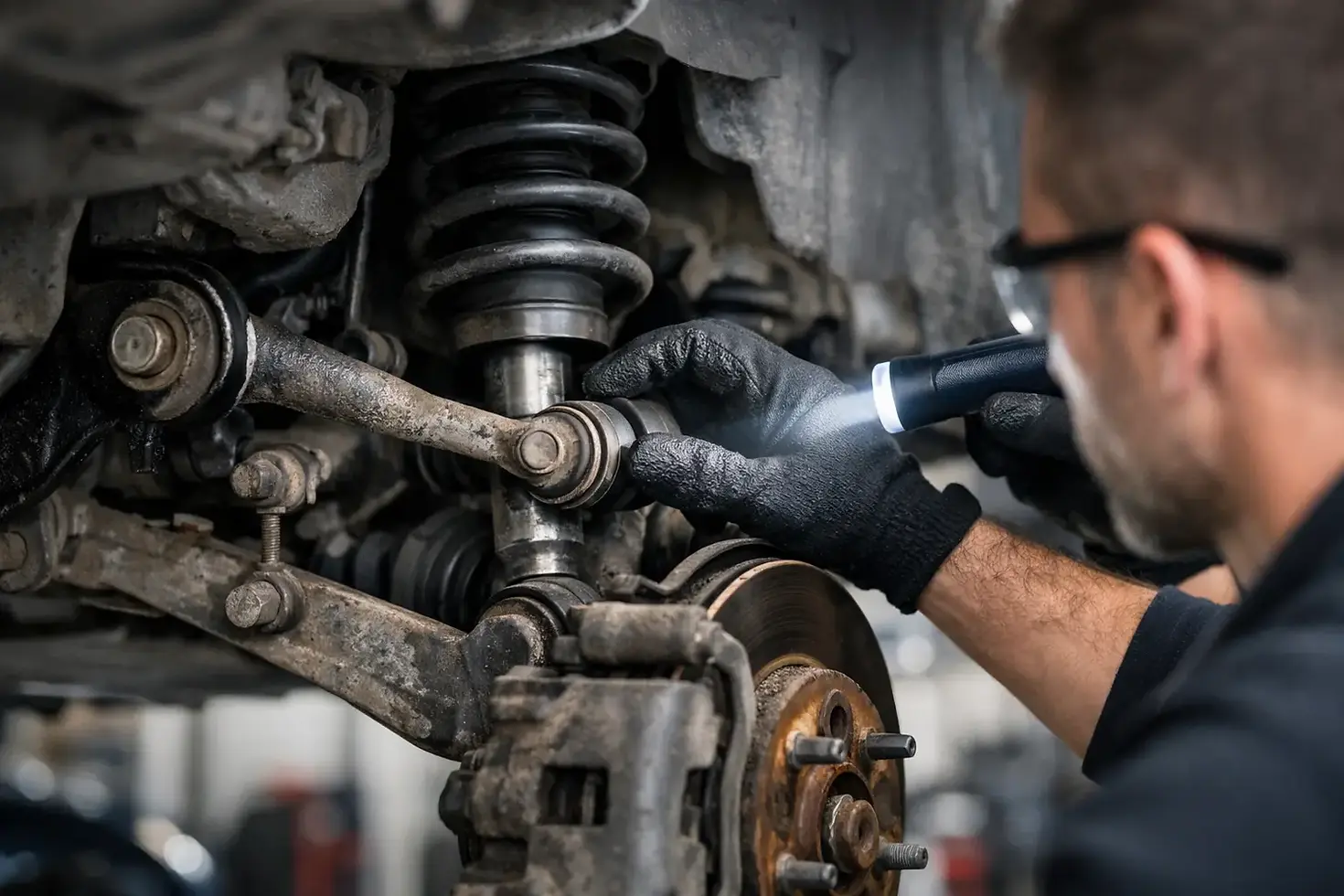
Suspension Noise Repair for Clunks and Squeaks

A sharp clunk over a Venice speed bump, a squeak when you pull into the driveway, or a rattle on U.S. 41 is more than an annoyance. Suspension noise repair begins by identifying when the sound happens and what the vehicle is doing at that moment. That detail helps separate a minor loose component from a worn part that affects steering, braking, tire wear, or vehicle control.
Your suspension supports the weight of the vehicle, keeps the tires in contact with the road, and helps the car remain stable through turns and stops. Because several parts work together, the same sound can have more than one cause. A proper inspection is the best way to avoid replacing parts based on a guess.
What Different Suspension Noises Can Mean
The sound itself is a useful clue, especially when paired with the road condition that brings it on. A noise over bumps points technicians in a different direction than a sound heard only while turning or braking.
Clunking over bumps
A clunk or knocking sound when driving over potholes, driveway entrances, or uneven pavement often involves a loose or worn component. Common possibilities include sway bar links, control arm bushings, ball joints, strut mounts, or loose mounting hardware. Worn shock absorbers or struts can also allow excess suspension movement, making other parts more likely to knock.
One clunk does not automatically mean a major repair. Sometimes a shield, bracket, or other nearby part is loose and makes a sound that resembles suspension trouble. That is why a technician should inspect the full area before recommending work.
Squeaking at low speeds
A repetitive squeak at low speed can come from rubber bushings that have dried, cracked, or worn out. Bushings cushion the connection points between suspension components and the vehicle frame. As they age, they can lose their ability to move quietly and smoothly.
Squeaks may be most noticeable when pulling into a parking space, turning into a driveway, or traveling slowly over a small bump. Florida heat, moisture, and normal age can all contribute to rubber deterioration. In some cases, the noise may also come from a brake component or steering part, which is another reason not to assume the source based on sound alone.
Rattling on rough roads
A light metallic rattle usually means something has play where it should be secure. Sway bar links, worn shock or strut mounts, loose heat shields, and brake hardware can all create rattling noises. The sound may disappear on smooth roads and return as soon as the road surface gets rough.
A rattle may seem minor, but it deserves attention if it becomes louder, happens more frequently, or comes with a change in how the vehicle handles. Parts with excessive looseness can wear faster and affect related components.
Clicking, popping, or groaning while turning
Noises during turns are often associated with steering or front-end components. A worn ball joint, tie rod end, strut bearing, or control arm bushing can make a pop or groan as weight shifts across the front suspension. A rhythmic click during a tight turn may also point to a worn CV joint rather than the suspension itself.
The distinction matters because these systems overlap. The driver hears one sound, but the repair depends on which part has wear, play, or damage. A hands-on inspection can determine whether the issue is in the suspension, steering, drivetrain, or brake system.
When Suspension Noise Repair Should Not Wait
Schedule an inspection soon if you hear a new suspension noise, particularly if it is getting worse. You should treat the concern as more urgent when the vehicle also pulls to one side, wanders on the road, dips forward during braking, feels unstable in turns, or has uneven tire wear.
A steering wheel that shakes, a vehicle that bounces repeatedly after a bump, or a visible fluid leak from a shock or strut also calls for prompt service. These symptoms can reduce traction and make it harder to control the vehicle in a sudden stop or wet-road situation.
If the noise is accompanied by a heavy clunk, loose steering feel, or a change in braking behavior, it is wise to avoid unnecessary driving until the vehicle is checked. A worn ball joint or severely damaged steering component can become a serious safety issue if it fails completely.
How a Professional Suspension Inspection Finds the Cause
Reliable suspension noise repair is not about replacing every part that might be worn. It starts with listening carefully to the customer. Knowing whether the noise occurs over bumps, during turns, under braking, or at a certain speed can save time and lead to a more accurate diagnosis.
A technician may road-test the vehicle when appropriate, then inspect it on a lift. The inspection includes checking for loose hardware, leaking shocks or struts, cracked bushings, worn mounts, damaged springs, and play in ball joints, tie rods, and sway bar links. Tire condition and alignment-related wear patterns are also reviewed because they can reveal how the suspension has been behaving over time.
Some issues are easy to confirm because the component has obvious movement or damage. Others take more care. A bushing may look aged but still function acceptably, while a part that appears normal can make noise only when the suspension is loaded in a specific direction. Good diagnosis considers both the condition of the part and the symptoms you are experiencing.
At Venice Auto Tech, the goal is to explain what was found in plain language, identify what needs attention now, and help you understand what can be monitored. That approach gives you a clear repair plan without pressure or confusing technical talk.
Repair Options Depend on the Part and the Vehicle
The right repair may be as simple as replacing a worn sway bar link or tightening hardware. Other situations call for replacing control arms, ball joints, struts, shocks, springs, or mounts. On many vehicles, certain bushings or ball joints can be replaced separately. On others, the manufacturer designs them as part of a complete control arm assembly.
This is where cost and long-term value need to be considered together. Replacing only the failed piece can make sense when the surrounding parts are in good condition. Replacing a complete assembly may cost more upfront but can be the better value if multiple built-in components are worn or if separate repair would add labor without lasting much longer.
Shocks and struts are usually replaced in pairs on the same axle. Replacing only one can leave the vehicle with uneven damping side to side, which may affect ride quality and handling. After suspension work, an alignment may be recommended or required, especially if work involved control arms, tie rods, struts, or components that affect wheel angles.
What Drivers Can Do Before Their Appointment
You do not need to diagnose the vehicle yourself, but a few observations can help. Try to remember whether the noise comes from the front, rear, left, or right side. Notice whether it happens on bumps, while turning, when braking, or only at low speed. If it began after hitting a pothole or curb, mention that too.
Avoid spraying lubricants on suspension parts to make a noise disappear. That can mask the symptom temporarily and make diagnosis more difficult, while doing nothing to correct worn or damaged components. It is also best not to ignore a noise simply because it comes and goes. Intermittent sounds often become easier to identify before they become larger, more expensive problems.
Regular tire rotations, alignment checks when needed, and prompt attention to changes in ride or steering can help protect the suspension over time. There is no single mileage when every suspension part fails. Road conditions, vehicle weight, driving habits, age, and climate all affect wear.
A quiet ride is nice, but the bigger goal is confidence behind the wheel. If your vehicle has started clunking, squeaking, rattling, or feeling different on the road, a straightforward inspection can give you the answer before a small concern turns into a safety issue.


Comments